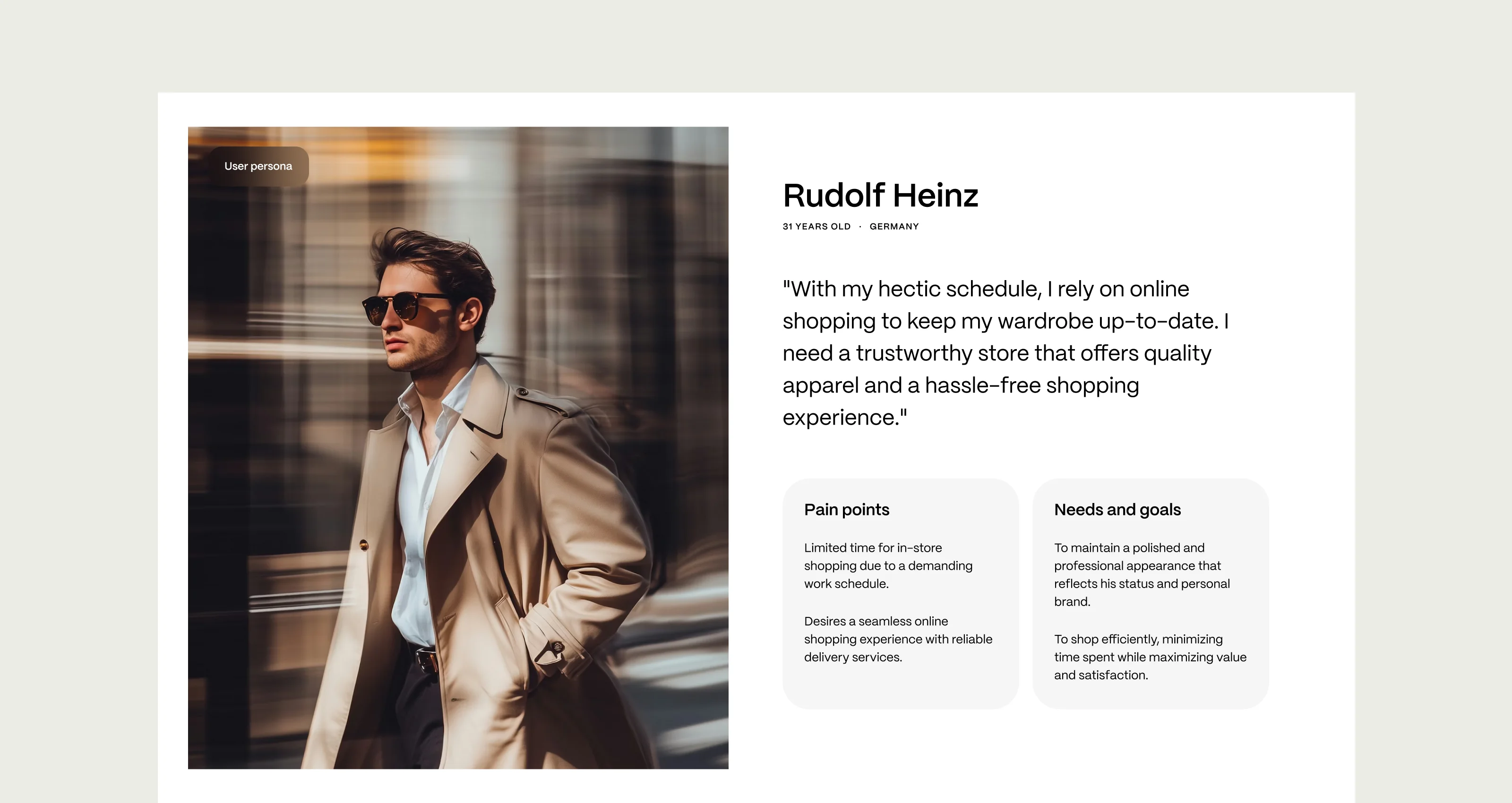
You’ve got the vision. You’ve got the product. You’ve got the drive.
But somehow, the growth isn’t quite matching the dream, not yet.
That missing link?
A clear, human-centered user persona.
Understand who you’re building for: their struggles, hopes and emotions and you stop designing products; you design impact.
Now, let’s see how that understanding drives everything that follows.
1. Understanding Your User’s Core Problem and Why It Matters
Every product starts with a promise: to make something easier, faster or better. But if you can’t describe your user’s problem as clearly as they would in their own words you’re designing in the dark.
1. What problems does your product solve for your ideal client ?
Not the polished version in your pitch deck, the real, messy, everyday one.
It’s not “streamlining workflows.” It’s “spending two hours fixing something that shouldn’t have broken.”
When you describe the problem the way your users actually feel it, your message clicks because it sounds like their day, not your slogan.
2. How does your ideal client describe these problems when talking to a friend/colleague ?
Let's take into account how they address the issue, what's behind their words and how they express their concern, their fear and their worry.
This should help you better understand where they're coming from and how to help them.
3. What frustration or challenges triggers their search for a solution like yours?
It’s rarely one big failure, it’s the small, repeated annoyances that finally break their patience.
Example:When Notion first started gaining traction, it wasn’t because teams were hunting for “a new productivity tool.” They were exhausted by juggling documents, notes and tasks across five different apps. The frustration of switching tabs a hundred times a day finally tipped the scale, Notion became the calm in their chaos.
4. What do they wish were different in their daily life or work?
5. What fears or concerns hold them back from making a change?
These questions build empathy, the real driver of clarity. See through your user’s eyes and everything shifts: your copy, your priorities, your product.
Now that you understand their world, let’s explore what they’re striving toward: their goals and aspirations.
2. User Goals, Aspirations and Desired Transformation
Here’s the secret : when someone chooses your product, they’re not just making a functional decision. They’re imagining a future version of themselves, a version where problems are solved, frustrations are gone and things just… work.
6. What is their main goal? What do they want to achieve and why ?
Every user has a compass, the why behind it is what really matters.
A founder might say they want to “scale,” but what they actually crave is freedom to stop being the bottleneck.
A marketer might want “better analytics,” but what they’re really after is confidence to prove their impact and get buy-in.
Uncover their deeper motivation and your messaging moves from features to meaning.
7. What are their aspirations and needs that go beyond surface level needs ?
8. What are they trying to escape from and what are they trying to get close to ?
This is where insight turns emotional. Users aren’t just buying solutions, they’re escaping something painful. Maybe it’s chaos, constant context-switching or the frustration of work that never feels done.
And what they’re reaching for isn’t just productivity: it’s peace, clarity or control.
9. How do they imagine their life or business will improve after finding the right solution?
10. How do they define success in their own words?
Forget polished taglines, how would they describe success to a friend? Maybe it’s, “I finally don’t dread Mondays,” or “We can actually focus on the fun parts again.”Those are the phrases that belong in your copy, your demo script and your landing page; because they sound like them, not you.
When users feel your product moves them closer to what they want, they invest and that’s when the real shift begins: the decision to act.
3. The Decision-Making Process
Every user journey reaches a point of quiet frustration, when the desire for change finally outweighs the comfort of staying the same.
It could be a missed deadline, a messy tool, a disappointing experience with another provider… or just that quiet realization that enough is enough. Suddenly, your user leans back, sighs and thinks: “Okay, I need something better.”
Here’s the thing: that moment doesn’t announce itself. It’s subtle, personal and unique to each user. If you don’t know what it looks like, you can’t meet them there.
11.What triggers the moment they decide to look for your type of solution?
Let's look at a small marketing team juggling multiple client campaigns. Deadlines slip, emails get lost and reporting takes hours longer than it should. One Monday morning, a client emails with a complaint about missed deliverables. That’s the trigger, the precise moment they start actively searching for a solution that makes their workflow predictable and stress-free.
12. Where do they go first when searching for potential providers or partners?
13. What frustrates them during the process of comparing different services or products?
Once your user is actively looking, they enter the comparison stage and this is where most businesses lose them. Frustration arises from confusing pricing, overwhelming features or unclear value.
By identifying what irritates users in this stage, you can streamline your own experience. Clear pricing, intuitive onboarding and upfront examples of how your product solves their specific problem can make all the difference. A well-designed comparison experience positions your product as the obvious, stress-free choice.
14. What do they want to see in an offer that builds their confidence and trust?
Users want assurance that their choice is safe, smart and worth the investment. This isn’t about flashy features but about credibility and reassurance.
Position your offer around trust signals: concrete results, relatable success stories and clear guidance. When your user feels confident before even signing up, conversion becomes almost effortless.
15. What would turn them off immediately and why?
4. Emotional and Psychological Insights
Even in B2B, every decision is deeply emotional.
Behind every click, every demo request, every sign-up is a real person. A person juggling deadlines, expectations and the ever-present fear of making the wrong choice. And no matter how rational the decision looks on paper, their emotions are quietly steering the ship.
16. What fears or frustrations arise while waiting for results or delivery?
If we imagine a SaaS product manager running a performance test can get stuck staring at dashboards, stressed about slow load times or failed tests. It’s not just a technical worry, it’s the fear of letting the team down, disappointing users or losing control. Your product changes the game.
Real-time alerts, clear metrics and reliable feedback turn that tension into calm confidence. They can see exactly what’s happening, make decisions without second-guessing and finally feel in control. It’s not just about getting the job done, it’s about removing the stress that gets in the way of doing great work.
In short, your product acts as a psychological safety net, replacing stress and fear with clarity, calm confidence and a sense of mastery over their work. That emotional shift is what keeps users coming back and trusting your solution.
17. How do they want to feel during their collaboration or user experience?
Teams want to feel empowered, supported and in control while working with your product.
For example, a distributed design team collaborating in your platform doesn’t just need file-sharing, they want seamless feedback loops and clarity on next steps. When your tool makes communication intuitive and mistakes rare, collaboration feels smooth, productive and even enjoyable.
18. How do they want to feel after using your product or service?
After using your solution, users want a sense of accomplishment, clarity and relief.
A project manager who just wrapped up a complex launch using your dashboard feels proud and in command, not just relieved. That emotional payoff: feeling capable, confident and successful is what turns first-time users into loyal advocates who come back and spread the word.
19. What beliefs or misconceptions might prevent them from seeing your true value?
20. What emotions (positive or negative) are tied to their experience with your product, brand or service?
When you truly understand the emotions behind their journey, you can design not just a usable interface, but a memorable, human-centered experience.
When users feel seen, loyalty follows as they become your advocates.
Emotion isn’t an afterthought, it’s the thread that ties every touchpoint together.But emotion lives inside context.
5. Lifestyle and Priorities
So now, zoom out: who are they really?
It’s easy to get caught up in data: job titles, industries, KPIs, but behind those metrics is a person with habits, routines and values that quietly influence every decision they make.
Understanding your user’s lifestyle isn’t about snooping into their personal life; it’s about context. It’s about understanding the world they operate in what pressures they face, what motivates them and what “a good day” looks like in their world.
21. What does a typical day in their life look like?
Zooming out helps you see your user as a real human, not just a data point.
22. What values guide their decisions at work and personally?
23. What motivates them to invest in improvement, growth or innovation?
Motivation drives action. Knowing what sparks it can shape messaging, pricing and feature prioritization.
For example, imagine a tech startup founder juggling a dozen projects and a team spread across different time zones. They don’t just want a place to store files, they need a tool that keeps everyone on the same page so ideas actually turn into action.
What motivates them? Moving faster, avoiding endless back-and-forth and showing investors real progress without losing sleep.
Or picture a healthcare clinic manager trying to keep patients happy while juggling a busy schedule. They’re not looking for another calendar, they want a system that makes appointments seamless, reduces wait times and lets care actually feel personal.
Their motivation? Better patient outcomes, smoother days and finally having that peace of mind that everything’s under control.
24. What does “trust” look like to them in a business relationship?
Trust is the foundation of conversion and loyalty
For some, trust is clarity: transparent pricing, clear outcomes and a no-nonsense explanation of how the product solves their problem.
For others, trust comes from social proof: testimonials from peers, case studies with similar businesses or early wins that demonstrate reliability.
When you understand how your users define trust, you can craft every touchpoint to reassure them. That’s how your brand moves from being “just another option” to the obvious choice; because they feel seen, understood and confident in their decision.
25. Who or what influences their decision-making (peers, trends, mentors)?
When you start to understand these nuances, you begin designing not just for usability, but for fit.
Your tone of voice shifts to sound more like them familiar, approachable, aligned. Your visuals feel intuitive, not forced. Your messaging resonates because it mirrors the way they think and talk.
And that’s how your brand moves from being “just another option” to the obvious choice; not because you shouted the loudest, but because you understood the deepest.
6. Outcomes and Reflection
Finally: the transformation.
After all the touchpoints, decisions and moments of hesitation, this is where things click.
The user’s story shifts from frustration to flow, from confusion to clarity.
This is the after they’ve been chasing and the reason your product exists.
But to truly understand the impact, you have to look at the before.
26. What do they gain by using your product or service as intended ?
Using your solution, users gain more than just functionality, they gain clarity and confidence in their work.
A fintech startup, for example, can finally track real-time customer transactions without juggling spreadsheets. Insights that once took hours are now visible in seconds, helping the team make smarter decisions faster. Your product turns complex data into clear, actionable intelligence that feels effortless.
27. From what problems or frustrations do they finally escape after working with you?
Your solution frees users from the frustrations that slow them down.
An e-commerce manager who struggled with lost orders, delayed shipments and inconsistent stock levels can now see everything in one dashboard. No more frantic emails or angry customer calls. The team escapes chaos and uncertainty, moving toward smooth operations, happy customers and fewer sleepless nights.
28. How does their perception of themselves or their business change after success?
Success changes how users see themselves and their business.
A SaaS product owner who once worried about user churn now feels in control, making confident decisions with clear metrics at their fingertips. An online retailer who struggled with inventory issues now sees their business as professional, efficient and reliable.
That sense of capability and pride turns users into advocates, they trust the product and the brand and they actively share their positive experience.
29. What measurable impact (ROI, efficiency, visibility) do they expect from your solution?
30. How would they describe your brand or solution when recommending it to others?
Here’s where insight turns into action.
Start anywhere - take action today!
Don’t wait for perfection. Pick one small but meaningful friction point in your product or process, maybe a confusing onboarding screen, a repetitive manual task or a message that’s not landing.
Then:
- Observe and note – Watch how users interact with it. Where do they hesitate? What confuses them?
- Make a small fix – Simplify the step, remove unnecessary clicks or rewrite a message so it speaks their language.
- Test immediately – Release the change to a small group or a single workflow. See how they respond.
- Collect feedback – Ask a few users directly: “Was this easier?” or track metrics like completion rate, time on task or engagement.
- Iterate – Use what you learn to refine further. One small improvement often reveals the next opportunity.
Every insight compounds, small improvements build into momentum.
Here’s a quick recap of the questions that guide it all:
1. What problems does your product solve for your ideal client ?
2. How does your ideal client describe these problems when talking to a friend/colleague ?
3. What frustration or challenges triggers their search for a solution like yours?
4. What do they wish were different in their daily life or work?
5. What fears or concerns hold them back from making a change?
6. What is their main goal? What do they want to achieve and why ?
7. What are their aspirations and needs that go beyond surface level needs ?
8. What are they trying to escape from and what are they trying to get close to ?
9. How do they imagine their life or business will improve after finding the right solution?
10. How do they define success in their own words?
11. What triggers the moment they decide to look for your type of solution?
12. Where do they go first when searching for potential providers or partners?
13. What frustrates them during the process of comparing different services or products?
14. What do they want to see in an offer that builds their confidence and trust?
15. What would turn them off immediately and why?
16. What fears or frustrations arise while waiting for results or delivery?
17. How do they want to feel during their collaboration or user experience?
18. How do they want to feel after using your product or service?
19. What beliefs or misconceptions might prevent them from seeing your true value?
20. What emotions (positive or negative) are tied to their experience with your product, brand or service?
21. What does a typical day in their life look like?
22. What values guide their decisions at work and personally?
23. What motivates them to invest in improvement, growth or innovation?
24. What does “trust” look like to them in a business relationship?
25. Who or what influences their decision-making (peers, trends, mentors)?
26. What do they gain by using your product or service as intended ?
27. From what problems or frustrations do they finally escape after working with you?
28. How does their perception of themselves or their business change after success?
29. What measurable impact (ROI, efficiency, visibility) do they expect from your solution?
30. How would they describe your brand or solution when recommending it to others?


.webp)
.webp)
